

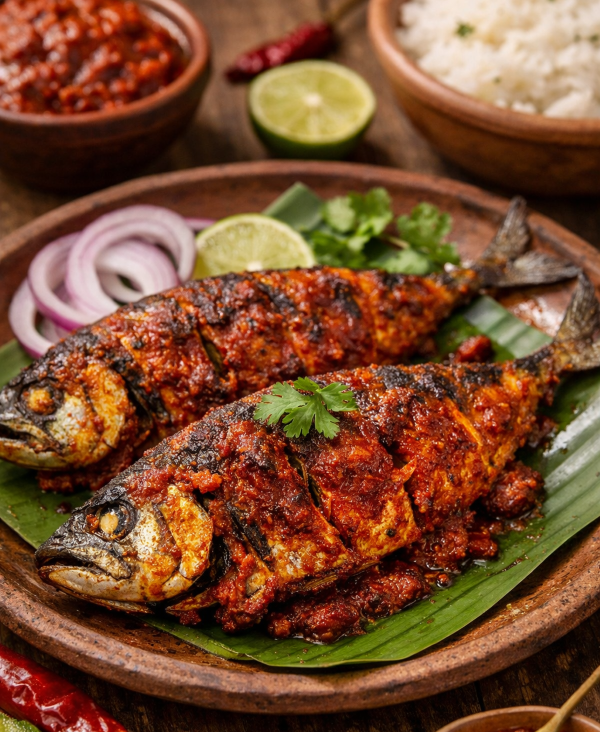
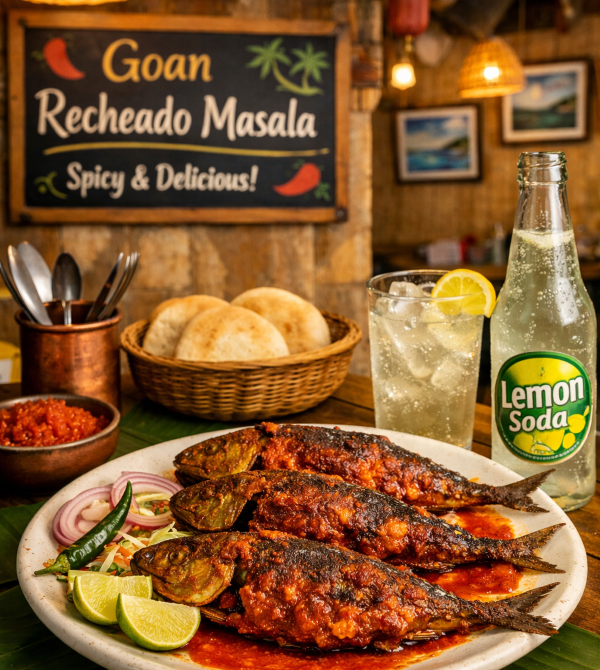
Goan Mackerel Recheado Masala is one of Goa’s most iconic seafood dishes — a fiery, tangy, and aromatic preparation where fresh mackerel is stuffed with a red masala paste of chilies, spices, tamarind, and vinegar, then shallow-fried to perfection. Rooted in Portuguese influence, it remains a beloved staple in Goan homes and taverns.
Goan Mackerel Recheado Masala Blog
History :
- Portuguese Influence: The word “Recheado” means stuffed in Portuguese, introduced during colonial times.
- Catholic Household Tradition: Every Goan Catholic family has its own guarded recipe, often stone-ground for authenticity.
- Cooking Style: Traditionally shallow-fried in coconut oil, balancing fire, acidity, and depth.
Ingredients
- 4 fresh mackerels (Bangda), cleaned & slit
- 12–14 Kashmiri/Byadgi red chilies (color)
- 4–5 Guntur chilies (heat)
- Tamarind pulp (sourness)
- Garlic, ginger, cloves, peppercorns, cumin, cinnamon
- Goan toddy vinegar (authentic tang)
- Coconut oil for frying
How to Make Goan Mackerel Recheado Masala
Prepare the Masala Paste
- Soak dried Kashmiri chilies, garlic, ginger, cloves, peppercorns, cumin, cinnamon, tamarind, and vinegar.
- Grind into a thick, smooth red paste. Add sugar and salt to balance flavors.
Stuff the Mackerel
- Clean and slit fresh mackerels.
- Generously stuff the masala inside and coat the outside.
Fry the Fish
- Shallow fry in coconut oil until crispy outside and tender inside.
- Serve hot with rice, curry, or sannas (Goan steamed rice cakes).
Why Goans Love It
- Flavor Explosion: The masala delivers a perfect balance — smoky, tangy, spicy, and slightly sweet.
- Cultural Identity: It’s more than food; it’s a heritage dish tied to family traditions and festive occasions.
- Versatility: Works as a snack, main course, or side dish with rice and curry.
- Nostalgia: Many Goans associate it with tavern meals, family gatherings, and coastal celebrations.
Goan Mackerel Recheado Masala is not just a dish — it’s a culinary symbol of Goa’s coastal heritage, blending Portuguese techniques with local flavors. If you’re exploring Goan cuisine, this is a must-try recipe that captures the soul of the region.

Comment (0)